UniMusic AI generates complete songs with vocals from text prompts or your own lyrics in seconds. It offers AI tools including remixing, vocal removal, stem splitting, and mastering, all accessible via a browser.
Discover the best Music AI Tools! Our website features a curated list of top-rated tools powered by artificial intelligence for music production, composition, and more. Explore now!
UniMusic AI generates complete songs with vocals from text prompts or your own lyrics in seconds. It offers AI tools including remixing, vocal removal, stem splitting, and mastering, all accessible via a browser.
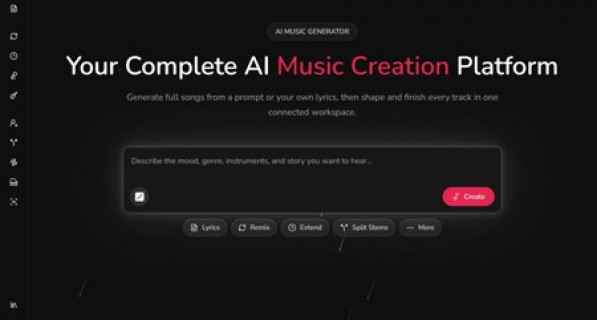
LumiMusic is an AI music creation platform that transforms text prompts or lyrics into full songs, allowing users to refine and share their music within a single workspace.

AI music generator that creates original songs, lyrics, covers, stems, and music videos from text prompts with royalty-free downloads for personal and commercial use.
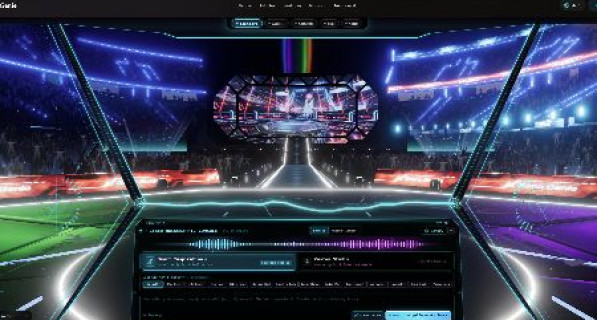
AISongGenie is a free browser-based AI tool that transforms text prompts or lyrics into full-length songs with real vocals in various music styles, offering studio-quality tracks for personal use.

Music Visualizer converts your music and artwork into dynamic, audio-reactive videos with customizable visual styles, perfect for social media and promotional use.

Convert audio files like MP3, WAV, and FLAC into editable MIDI format directly in your browser without uploading the source file. Preview piano-roll and download MIDI files instantly.
AI Rap Generator transforms short ideas or your lyrics into complete rap tracks featuring original beats and AI-generated vocals in about a minute, ideal for artists seeking quick music creation.
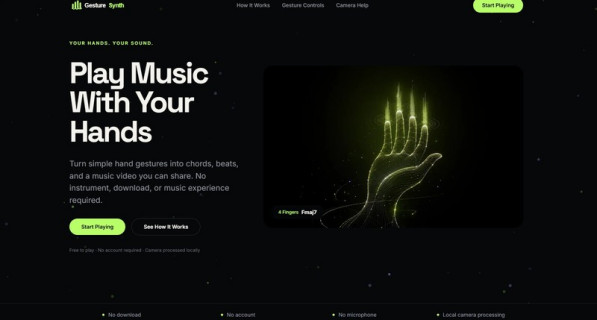
Gesture Synth is a free browser-based music instrument that uses AI-powered hand tracking to turn your gestures into harmonious chords, beats, and a shareable music video.

MusicAny is an AI-powered tool to generate original songs, background music, and AI music videos from text prompts for social media, videos, podcasts, and more.
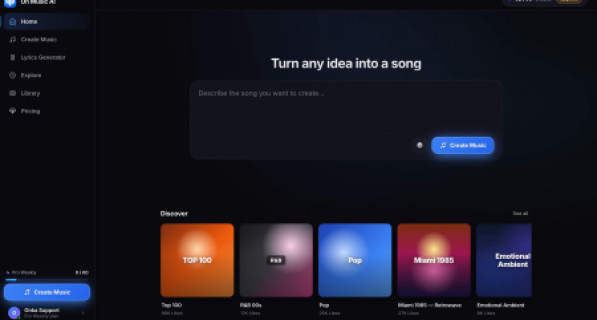
On Music AI is an AI-powered platform that transforms your text, lyrics, or ideas into complete songs with vocals, beats, and instrumentals, enabling music creation without prior experience or equipment.
Editors' Perspective on the Music Category
In recent years, the music industry has witnessed a transformational shift with the integration of artificial intelligence (AI) into various aspects of music production. AI-powered tools have revolutionized the way musicians, producers, and composers create, enhance, and manage music content. In this article, we will explore the emerging trend of music-related AI tools and how they are reshaping the landscape of music production.
Boosting Creativity with AI-Driven Music Composition
AI-driven music composition tools have opened up new possibilities for musicians and composers, providing unique ways to generate original music content. These tools leverage advanced algorithms and machine learning techniques to analyze vast amounts of musical data, including melodies, harmonies, rhythms, and arrangements, and generate new compositions based on predefined criteria or user-defined inputs.
For example, AI-powered composition tools can generate melodies and chord progressions based on a given genre, style, or mood, providing a starting point for musicians to build upon. These tools can also analyze existing music tracks and generate variations or remixes based on the original content, offering creative inspiration and new directions for music production.
Furthermore, AI-driven composition tools can assist in creating music for specific purposes, such as film scoring or video game soundtracks. These tools can analyze visual cues, emotional contexts, or narrative elements and generate music that complements the intended purpose, enhancing the overall impact of the content.
Enhancing Music Production with AI-Powered Audio Processing
AI-powered audio processing tools are revolutionizing the way music is mixed, mastered, and enhanced, providing unprecedented speed, accuracy, and creative possibilities. These tools leverage advanced algorithms and machine learning techniques to analyze and process audio signals in real-time, automating various aspects of music production, such as equalization, compression, and mastering.
For instance, AI-driven equalization algorithms can analyze the frequency content of audio signals and automatically adjust the equalization settings to optimize the overall balance and tonality of the music. AI-powered compression algorithms can automatically adjust the dynamic range of audio signals, enhancing the clarity and punch of the music without sacrificing the natural dynamics.
Moreover, AI-powered mastering tools can analyze and process music tracks based on predefined criteria or user-defined preferences, ensuring consistent loudness levels, tonal balance, and dynamic range across the entire album or playlist. These tools can also provide advanced features such as intelligent loudness normalization, multiband compression, and stereo imaging, empowering music producers to achieve professional-quality results with minimal effort and expertise.
AI-driven metadata and recommendation tools are transforming the way music is managed, organized, and discovered, providing advanced features for music library management, metadata tagging, and recommendation engines.
For example, AI-powered metadata tagging tools can automatically analyze and categorize music tracks based on factors such as genre, mood, tempo, and key, making it easy for musicians and producers to search, organize, and manage their music assets effectively. These tools can also provide suggestions for relevant metadata tags based on the audio content, reducing the need for manual tagging and ensuring consistent metadata across the music library.
Furthermore, AI-driven recommendation engines can analyze listening habits, user preferences, and contextual data to provide personalized music recommendations to listeners, enhancing the discovery and exploration of new music. These recommendation engines can also provide insights and analytics for music producers and labels, helping them understand audience preferences and trends, and make informed decisions for music production and marketing strategies.
Conclusion:
The integration of AI in music production has opened up new horizons for musicians, producers, and composers, providing unprecedented creativity, efficiency, and quality in music creation, enhancement, and management. From generating original compositions and enhancing audio processing to managing metadata and


